American Water Supply: Heroic Feats that Saved Our Cities
This post is part of our History of Water Supply series
America’s early examples of urban water infrastructure projects still astound us today, but to people at the time, they were downright unbelievable. Water infrastructure lagged behind population growth in the early Unites States, but once it caught up, truly amazing innovations occurred. This new technology is what lay the groundwork for the water systems we still use today.
The major challenge was the speed of population increase. The US population tripled between 1870 and 1900 alone, with the explosive growth concentrated around urban areas. As overcrowding got worse, poor sanitation and contamination plagued cities.
By fighting through these growing pains, modern urban planning grew into adulthood.
Engineers and city officials carried the future of early American cities on their shoulders. How did they respond? What did they build, and how did they do it? Three American cities, Philadelphia, New York, and Chicago, each with a unique relationship to water, drive at the heart of many water-related problems that are still relevant today: Where should the money for providing water services come from? How should agencies and districts be run and operated? To what lengths will cities and districts go to ensure clean and safe water supply?
These questions, and the answers that came from engineers, governments, and inventors, helped shape the trajectory of American water supply.
Philadelphia

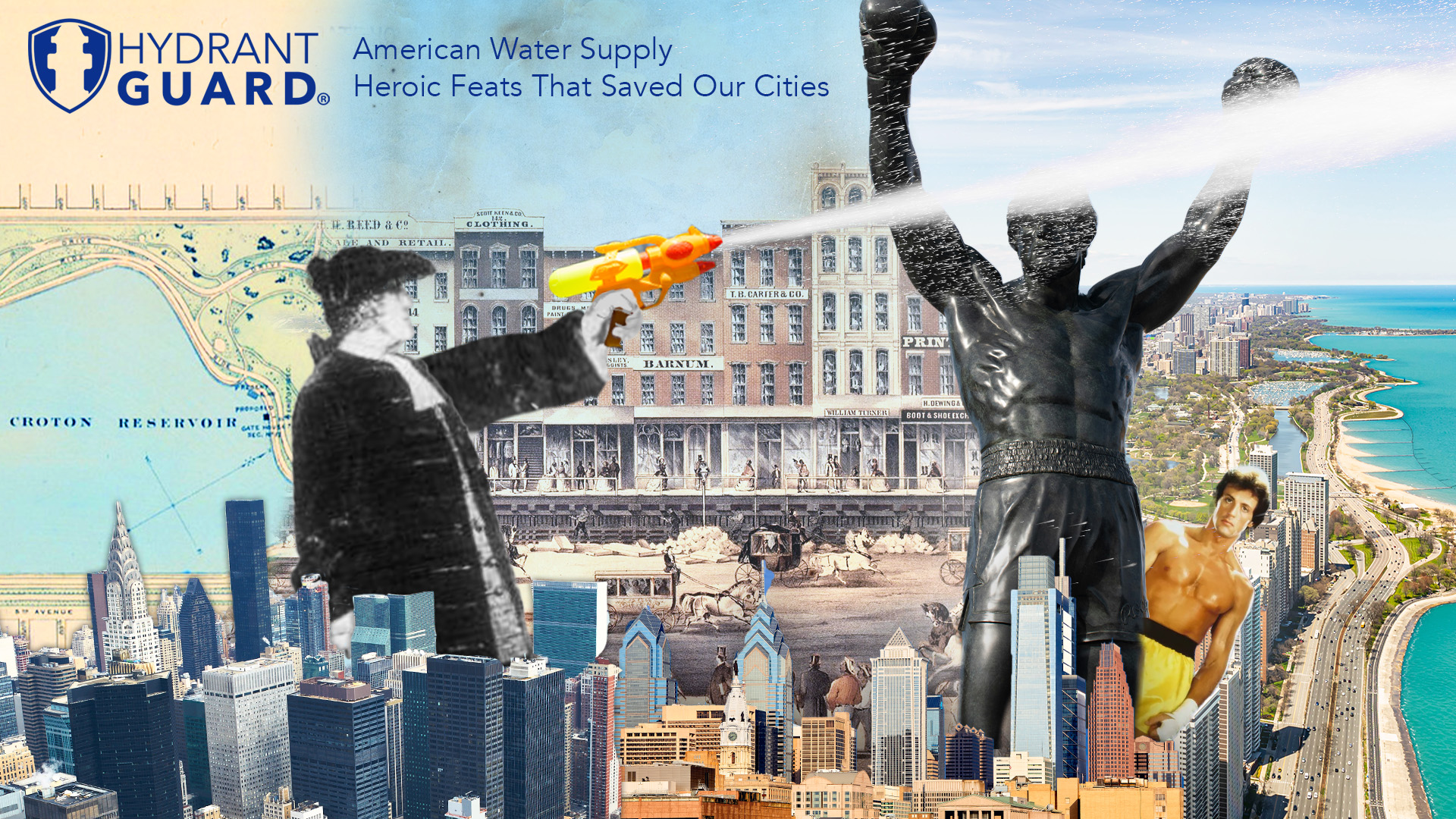
Frederick Graff shaped the City of Brotherly Love more than just about anyone. In his position as Head Engineer and Architect of the city’s waterworks, he lifted water access from underground by dreaming up the modern fire hydrant.
And that’s just for starters. When Graff took office, the Philadelphia Water Works, built by a private enterprise, was failing the city—the original steam engine pumps were breaking down too often. When they were operational, they pushed water into two small tanks made of wood, making them inflexible, leaky, and impermanent.
As Graff surveyed the site, he wondered why they were not using the natural hill just above the pumps. Wouldn’t this be an ideal site for a reservoir? It would be close enough to the Water Works to maximize efficiency, and high enough above the city to allow gravity to pressurize the city pipes. It was time to dismantle the old wooden cisterns for firewood.
After carefully examining the pumps, he again decided to use nature in his favor: the Schuylkill River’s current is very strong, so he began replacing the unreliable steam engines with state-of-the-art waterwheels and embarked on retrofitting the old wooden pipes with new iron pipes—a project that took 30 years to complete. Today, the Philadelphia Art Museum sits atop the reservoir. Even if you’ve never been to Philly, you probably know the setting: these are the steps Rocky Balboa struggled to climb, but ultimately conquered, turning the museum and the reservoir into an international icon.
In their time, these modernizations captured Philadelphia’s imagination. But citizens and officials took note of the original model’s failure—how it had been privately funded, prioritizing profit over urban sustainability.
The real success of Graff’s vision was that it began to build civic trust, as city dwellers began to see local officials as trustworthy investors and builders, and as responsible stewards of public money. That mindset would later lead to the establishment of water agencies as quasi-governmental bodies, with their own authority to raise taxes and issue bonds.
These were the prototypes for the water districts we see today across the United States.
New York

Like Philadelphia, New York suffered from profiteering in early water systems. New York’s first water company was chartered in 1799. Unfortunately, the founder’s ambitions outweighed his civic duty.
Aaron Burr (yes, that Aaron Burr, the former Vice President who killed Alexander Hamilton in what’s regarded as the most infamous duel in American history) used his 1799 water charter to disguise his true intention: to break into finance. In the charter, he received permission to use the company’s surplus capital for banking. This meant that water supply took an immediate backseat to moving money. He built New York’s first system with cheap materials and did a less-than-acceptable job of separating clean water from sewage.
In the 1830s, public outrage over the city’s lack of sanitation forced the municipality to take control. City officials (and the engineers they hired) embarked on a marvel engineering project known as the Croton Aqueduct. The Croton River north of the city was dammed, cement aqueducts built, enormous tunnels dug, and iron piping laid. A series of canals and reservoirs finally connected New York to a clean and reliable water source.
The Croton Aqueduct was truly the talk of the town. When the megaproject was finally finished, the city held an official day-long celebration. And New Yorkers’ enthusiasm was not out of place: the Croton project was a resounding success. All over the city, houses were going up with indoor baths and sinks, and New Yorkers could now drink their refreshments with a new peace of mind. Nor did the Croton project disappoint the ambitious minds behind it—the system that was built almost 200 years ago is still the foundational watercourse for the Big Apple’s complex water system.
New Yorkers still brag about their water quality, demonstrating that urban water supply is as much a point of pride in New York hearts as their sports teams, subway system, and pastrami sandwiches.
Chicago
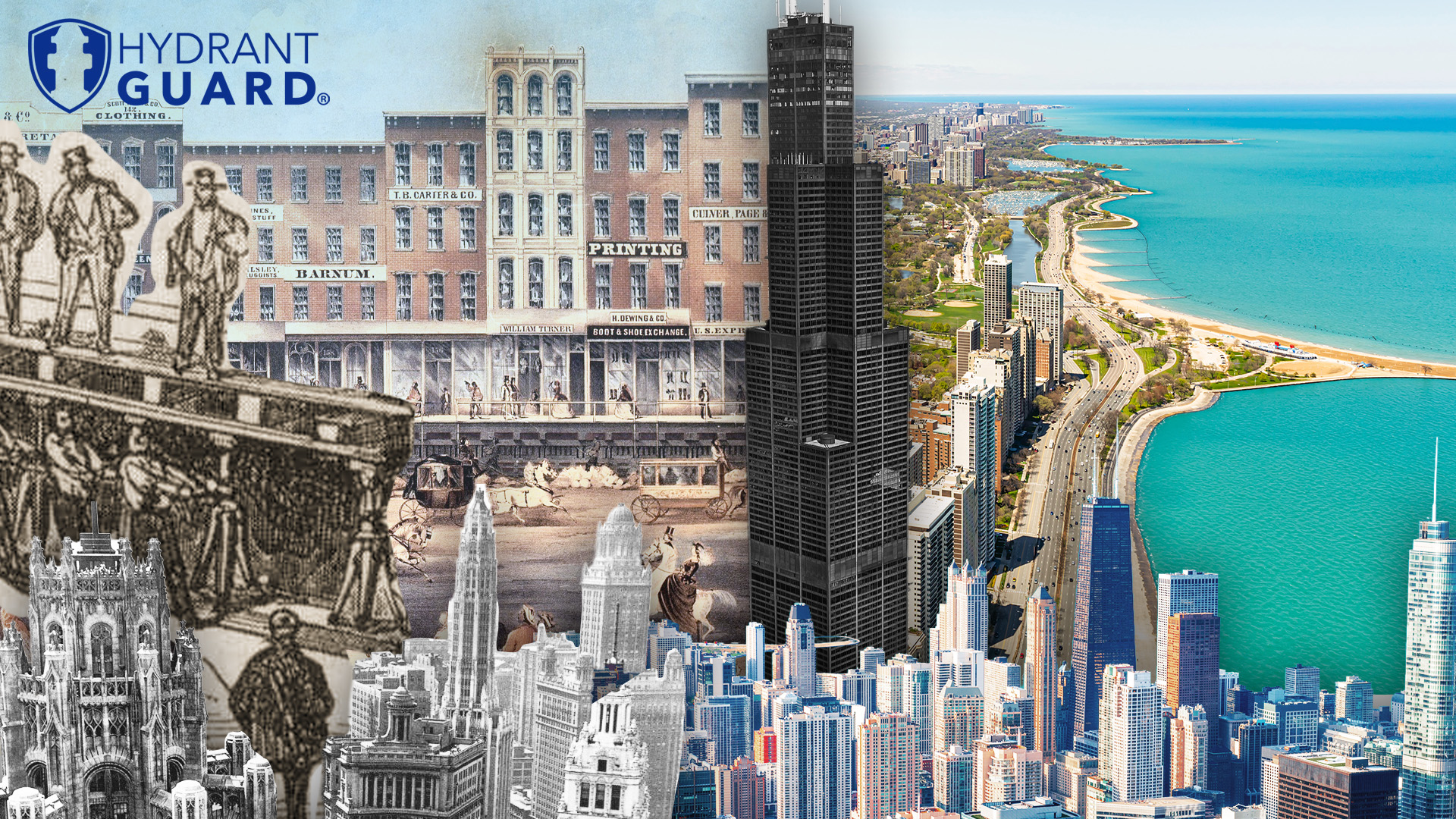
Situated on a huge source of fresh water, Lake Michigan’s sheer size was a double-edged sword—all that clean, fresh water gave Chicagoans a false sense of safety—to early residents, it seemed too big to contaminate. When a cholera outbreak in 1854 killed 6% of Chicago’s population, they began to doubt their beliefs.
The city needed major infrastructure investments, and Chicagoans did not hold their ambitions in check: what they would go on to accomplish is still a testament to Midwest ingenuity.
First, Chicago needed a sewer system. But how could they move sewage in a city built on flat terrain in the era before the widespread adoption of mechanical pumps? They needed to engineer gravity. During the Raising of Chicago, the entire city was literally lifted by several feet, building by building using screw jacks, in an unprecedented achievement of civil engineering.
But although the finished sewers were incredibly executed, they turned out to be poorly conceived—the engineers pinned their hopes on the river’s current washing the effluent further out in the Lake, protecting the water near the shore from contamination. But their hopes died as the river quickly became an open sewer. They’d built a tremendous system, but still their problems persisted.
Next, they tried something that was (once again) new and unprecedented: they built cribs that took in clean water from several miles offshore, but strong storms would still push the sewage out into the cribs.
It was finally time for a fail-proof solution. It was time to leverage every ounce of Illinois manpower to get it done.
The Chicago Sanitary and Ship Canal was the world’s largest excavation project until the Panama Canal. 24 miles long, 24-feet deep, and up to 160 feet in width, the canal was dug between the Chicago River and a plain that drained through the Des Plaines and Illinois Rivers into the Mississippi River. Because the new canal sat lower than Lake Michigan, gravity caused the Chicago River to actually reverse course entirely (have you noticed it flowing backwards?). Although this made Chicagoans’ effluvium someone else’s problem (a story for another day), it revolutionized the Windy City’s sanitation.
The great water projects of the eastern cities laid the foundation for what would unfold across the American West. By the time Philadelphia, New York, and Chicago had largely solved their own crises of sanitation, supply, and engineering, the western states were only beginning to build their first basic water systems. The East demonstrated how civic willpower, public investment, and technological adaptation could transform entire cities—offering an adaptable model for the Western states to follow.